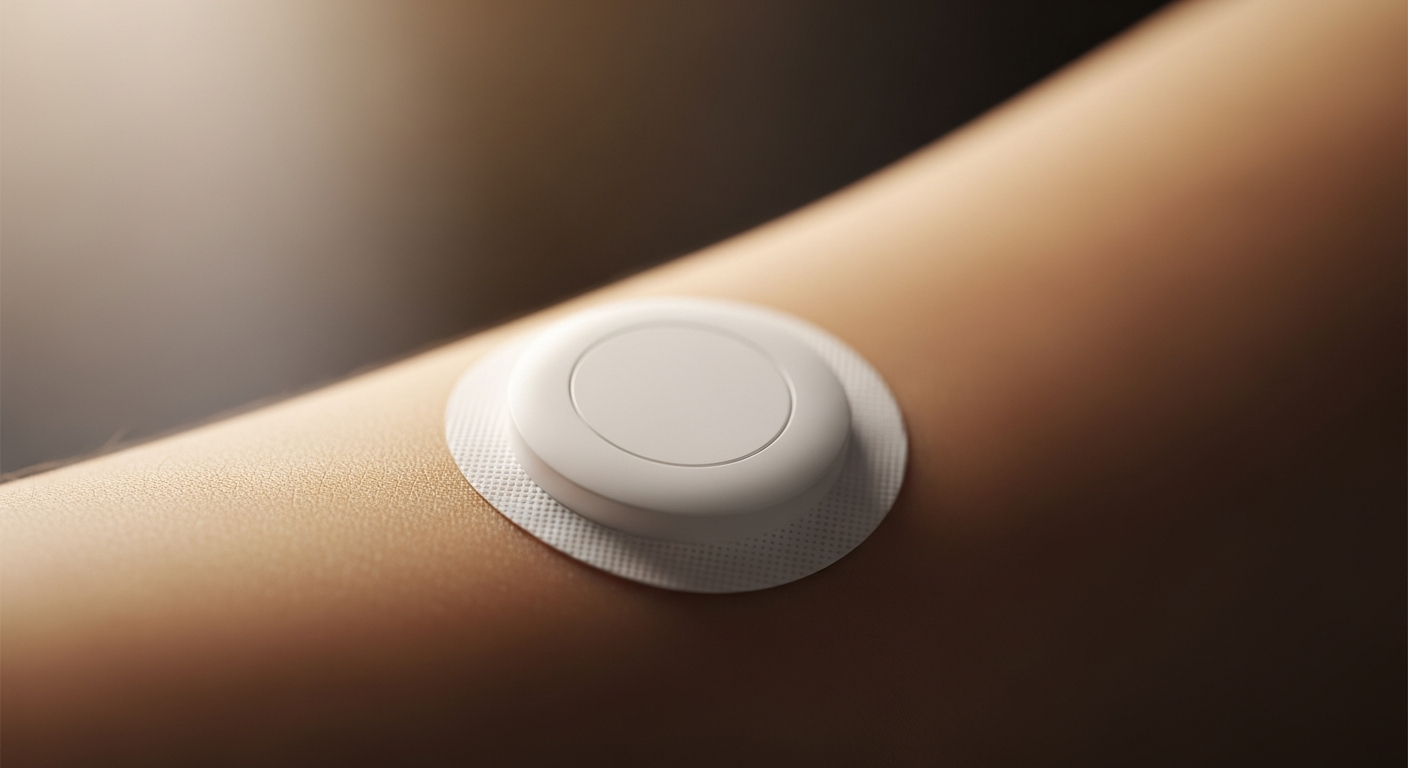
By Maximilian Naumow — I’ve been continuously wearing CGMs since early 2026 for self-experiments. Currently: FreeStyle Libre 3 Plus in Germany, and I’ve tested Lingo as a UK import.
TL;DR: Abbott Lingo is still not officially available in Germany as of July 2026 — the German launch is announced but has no date, and UK import is legal-grey, uncertified and awkward. Because Lingo and FreeStyle Libre 3 Plus run on the same Abbott Factor-3 sensor hardware, you gain nothing in data quality by importing: the difference is the app, not the sensor. For German non-diabetics the pragmatic buy is Libre 3 Plus at the pharmacy (~€65–75, 15-day wear time, EU-CE certified) — unless you specifically want Lingo’s coaching interface.
Key Findings
- Lingo is not officially available in Germany as of July 2026. UK launch was January 2024, German launch announced but without a date. Importing via UK is possible but practically annoying (App Store region, no EU certification, no German support).
- The sensor hardware is essentially identical. Both (Lingo and Libre 3 Plus) use Abbott’s Factor-3 sensor family. Accuracy and form factor identical. The difference is app, wear time, and positioning.
- Libre 3 is phased out in 2026 — only Libre 3 Plus is produced now. 15-day wear time (up from 14), otherwise identical.
- For European users today, pragmatic: FreeStyle Libre 3 Plus. Pharmacy-available, EU-CE certified, ~€65-75 per sensor.
- Lingo import is only worth it for coaching-app fans — the raw sensor data is identical. If you want Ambulatory Glucose Profile and clinical metrics, stay with Libre 3 Plus.
Is Abbott Lingo available in Germany in 2026?
No. As of July 2026 Lingo has no official German availability — only a launch announcement without a date. What German pharmacies actually sell is FreeStyle Libre 3 Plus, which uses the same Abbott sensor hardware. So the real decision is not which sensor to buy, but which app you want.
Two things you need to understand before buying a consumer CGM in Germany 2026:
- Lingo is an app, not a new sensor. Abbott’s sensor hardware is essentially the same in Libre 3 Plus and Lingo. What differentiates Lingo is target-audience positioning as a “non-diabetic biosensor” with a coaching app.
- Libre 3 is dead, long live Libre 3 Plus. Abbott phased out the old Libre 3 in 2026 completely. Everything sold in German pharmacies today is Libre 3 Plus — 15 days instead of 14, otherwise identical.
The question “should I buy Lingo or Libre 3 Plus?” is therefore less a sensor question than an app question.
Why isn’t Lingo available in Germany yet?
Germany regulates consumer biosensors more strictly than the UK or the USA. Abbott has to clear the German medical-device approval process, defend the consumer positioning against regulation written for diabetics-only devices, and localise the app with German nutrition data. Lingo launched in the UK in January 2024 — Germany simply sits at the back of that queue.
Quick timeline:
- September 2024: Lingo launch USA
- January 2024: Lingo launch UK
- December 2025: Android support (US)
- July 2026: German launch announced, no date
The reason for the German delay is straightforward: Germany regulates consumer biosensors more strictly than UK or USA. Abbott has to go through the German medical device approval process, defend the consumer-positioning claim against traditional “for-diabetics-only” regulation, and localize the app in German with local nutrition data.
For marketing teams that means: Germany comes later because it comes later. For us it means: wait or import.
Lingo or FreeStyle Libre 3 Plus — which should you buy?
For anyone based in Germany, Libre 3 Plus wins on every practical axis: pharmacy availability, EU-CE certification, German app and support, and a longer 15-day wear time. Lingo only wins on app experience — coaching, Glucose Score and streaks — and costs roughly €50 more per sensor cycle once you factor in UK import. Sensor accuracy is a tie, because it is literally the same hardware.
| Criterion | Abbott Lingo | FreeStyle Libre 3 Plus |
|---|---|---|
| Available in DE | No (UK import only) | Yes, in every pharmacy |
| Wear time | 14 days | 15 days |
| Sensor hardware | Abbott Factor-3 family | Abbott Factor-3 family (identical) |
| Accuracy | ★★★★★ | ★★★★★ |
| App focus | Coaching, Glucose Score, streaks | Clinical: AGP, Time-in-Range, trends |
| Price (DE) | ~€103 (2 sensors, UK import) | ~€65-75 per sensor (pharmacy) |
| Annual cost | ~€1,340 (UK import) | ~€1,560-1,800 (pharmacy, continuous) |
| German app | No | Yes |
| Insurance coverage | No | Only with diabetes indication |
| EU-CE certified | No (UK-only) | Yes |
| Best for | Coaching fans, beginners | Data-focused users, EU users |
🎯 Buying recommendation July 2026 — for German non-diabetics: FreeStyle Libre 3 Plus at the pharmacy. No import, EU-certified, same sensor quality as Lingo.
Do Lingo and Libre 3 Plus use the same sensor?
Yes. Both run on Abbott’s Factor-3 sensor family, and after several weeks of parallel wear the raw data is essentially identical. The split is pure marketing: Libre 3 Plus is positioned as clinical and diabetic-facing, Lingo as consumer wellness. You are not choosing a better sensor — you are choosing a better app for your purpose.
I’ve worn both. After several weeks of parallel testing, I can say: the raw sensor data is essentially identical. Of course — it’s the same sensor hardware in both products. What Abbott does is a marketing split:
- Libre 3 Plus = clinical, positioned for diabetics, “medical” app
- Lingo = consumer, positioned for “wellness-focused users”, “lifestyle” app
For you as a non-diabetic that means: you’re not choosing the “better sensor” but the “better app for your purpose”. And “better” is what YOU decide:
- I want coaching + nutrition feedback → Lingo app is built for that. Glucose Score per meal (0-100), streaks, “what did you have for breakfast and how was the response?”
- I want raw data + trends I interpret myself → Libre 3 Plus app. Ambulatory Glucose Profile, Time-in-Range %, CSV export, compatible with xDrip4iOS and various third-party tools.
- I want maximum cross-correlation with other health data → Libre 3 Plus + Apple Health sync + openclaw-biohub. Raw data in your own DB, analyze with your HRV/sleep/supplement data.
For most of our readers (biohackers, QS users) option 3 is the way.
Can you import Lingo from the UK to Germany?
Technically yes, practically rarely worth it. You need a UK-region App Store account, a UK delivery address or freight forwarder (~€15–25 per package), and a payment method that works with hellolingo.com/uk — and you get no German support, no German app and no CE marking for the EU. Since the sensor data is identical to Libre 3 Plus, you are paying roughly €50 extra per cycle for the coaching interface alone.
Technically yes. Practically: complicated and rarely worth the effort.
What you’d need:
- Apple App Store account with UK region (or Google Play UK) — can’t be your primary account, needs to be separate
- UK delivery address or freight-forwarding service (~€15-25 per package)
- UK credit card or payment method that works with hellolingo.com/uk
- No German support, no German app version
- Legally: no CE marking for the EU; importing to Germany as a consumer biosensor is a gray zone (not illegal, but not clearly regulated either)
Worth it if:
- You absolutely want the coaching-app experience
- You’re technical enough to switch App Store regions
- You’re willing to pay ~€50 more per sensor cycle for “feels cooler” vs a clinical app
For everyone else: Libre 3 Plus at the pharmacy, download the app, done.
What can you actually do with Libre 3 Plus as a non-diabetic?
Four metrics matter: Time-in-Range 70–140 mg/dL (aim for >95%), post-meal peaks below 180 mg/dL with a return to baseline inside two hours, a flat overnight curve between 80–100 mg/dL, and a fasting morning value of 85–95 mg/dL. Chronically above 100 mg/dL fasting is an early insulin-resistance signal worth investigating.
The often-underestimated point: the clinical Libre 3 Plus app is actually very useful for non-diabetics once you know what to look for:
- Time-in-Range 70-140 mg/dL — as a non-diabetic you should hit >95%
- Post-meal glucose spikes — peak <180 mg/dL, return to baseline <2h is a good marker
- Overnight curve — flat line between 80-100 mg/dL = good sign. Wild oscillation = sleep-quality and nutrition problem
- Fasting morning — 85-95 mg/dL ideal, chronically >100 = early insulin-resistance signal
Combined with HRV and sleep data, this becomes powerful. Anyone doing this seriously wants the data in their own DB → see our openclaw-biohub setup.
Full comparison: Lingo vs Libre 3 Plus vs Stelo
If you want to look at all three options (including Dexcom Stelo), here’s our extended three-way CGM comparison for non-diabetics in Germany. Short summary:
- Libre 3 Plus — the pharmacy default in Germany
- Dexcom Stelo — the app-focused alternative if you prefer the Dexcom ecosystem (available via Oura Store DE, €89-99/month)
- Lingo — the coaching variant, but only via UK import until the German launch
Verdict: which CGM should you buy in Germany right now?
For German non-diabetics wanting a CGM in 2026, the pragmatic answer is FreeStyle Libre 3 Plus — pharmacy, €70 per sensor, same Abbott sensor hardware as Lingo. If you absolutely want the consumer coaching app, you have to import Lingo from the UK (€50 extra cost per sensor cycle, App Store region switching, no German support).
Bonus argument for Libre 3 Plus: raw data exports cleanly into your own tracking setup. Anyone doing QS seriously doesn’t want to be locked into Abbott’s coaching app — they want the curve as CSV, Apple Health sync, and correlation with HRV, sleep, and supplements.
If you decide on Libre 3 Plus: ask at your pharmacy directly or order online through pharmacy portals (DocMorris, Shop-Apotheke, medpex — prices vary by ~€10).
Disclaimer: Affiliate links are marked in the article. Not medical advice. CGM use as a non-diabetic is self-experimentation — persistently abnormal values (fasting >100, frequent spikes >180) belong at a doctor, not self-diagnosed from this article. All prices as of July 2026 and may vary.
Updated: July 15, 2026 (initial publication)