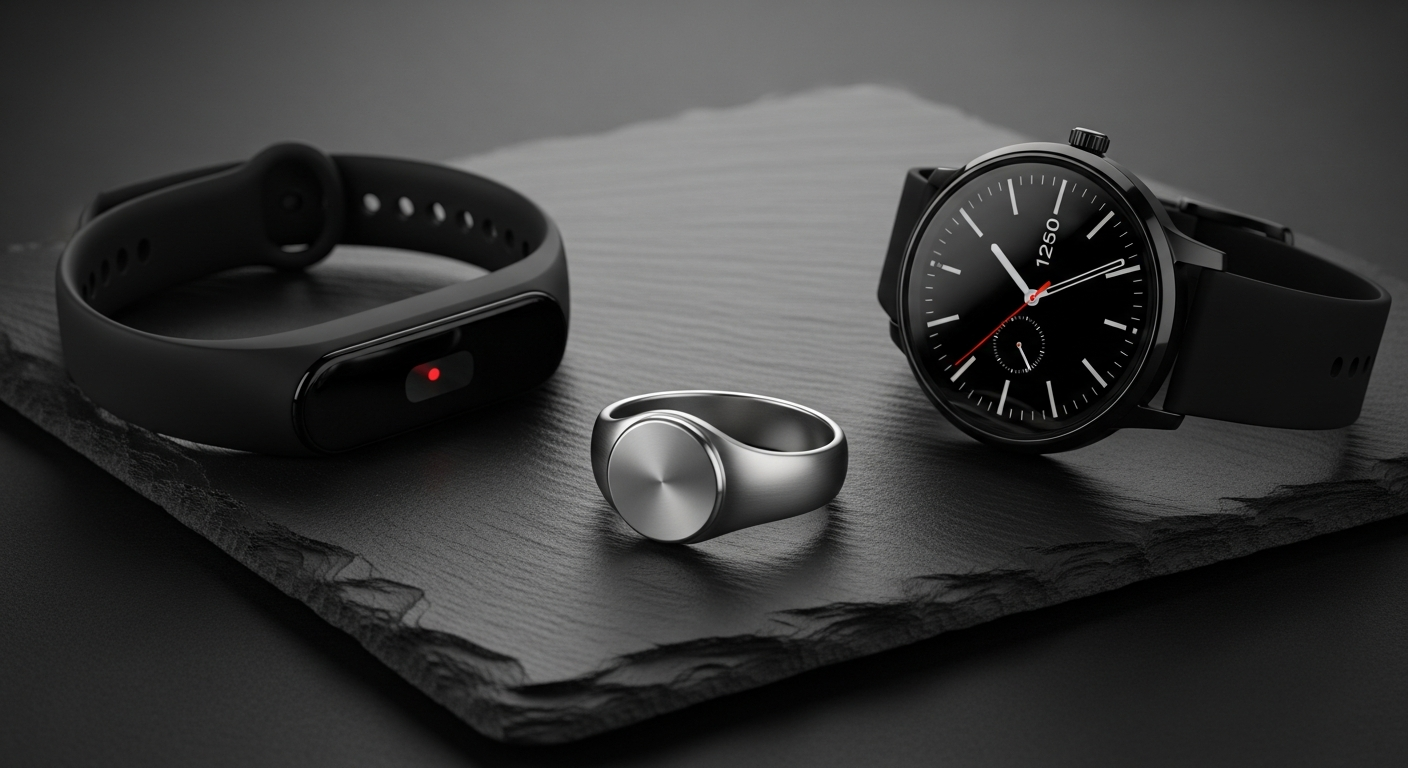
I’ve worn Whoop 4.0 daily for over a year. Before that, a Garmin. I also tested the Oura Ring for a month. My honest take: each device is right for a different person — but only one will change how you train.
Here’s the complete comparison.
What Fitness Wearables Actually Can (and Can’t) Do
Before we compare: let’s calibrate expectations.
What modern wearables do well:
- HRV as a recovery indicator
- Sleep stage detection (Light, REM, Deep, awake)
- Resting heart rate trend over weeks
- Calorie burn (roughly, ±15–25% error)
- Activity recognition
What they can’t do:
- Make medical diagnoses
- Accurately measure blood oxygen (trend yes, absolute no)
- Determine hydration status
- Measure cortisol or other hormones directly
Know these limits, and you can benefit enormously from the data. Ignore them, and you’ll be frustrated.
The Candidates
Whoop 4.0
Best for: Athletes, performance optimizers, people who take recovery seriously
Cost: Device free, membership from $239/year (~$19.92/month)
What it does:
- Continuous HRV tracking (overnight + daytime)
- Daily Recovery Score 0–100%
- Strain Score (daily load)
- Sleep stage analysis
- Respiratory rate
- No display — app only
My 12+ month experience: The Recovery Score is startlingly accurate. On low-score days I feel the difference in training — even when I think I feel okay. The biggest value: HRV as a decision framework for training intensity.
What annoys me: the subscription model, and no display is occasionally inconvenient.
Oura Ring Gen 3
Best for: People who want discreet tracking, sleep optimizers, ring-wearers
Cost: Ring from €349 + membership €6/month
What it does:
- Excellent sleep tracking (finger contact = better signal than wrist)
- HRV, resting heart rate, body temperature
- Readiness Score (similar to Whoop’s Recovery Score)
- Activity recognition
- Discreet: no device visible on wrist
Advantages over Whoop:
- No expensive subscription (just €6/month)
- Better for sleep tracking specifically
- Looks like regular jewelry
- Body temperature tracking (useful for illness detection)
Weaknesses:
- Strain tracking less detailed than Whoop
- No active workout guidance
- Ring can be uncomfortable during certain exercises
Garmin (Forerunner / Fenix Series)
Best for: Endurance athletes, runners, triathletes, GPS users
Cost: €300–800 one-time (no subscription)
What it does:
- GPS tracking (runs, cycling, hiking)
- HRV Status (daily, less detailed than Whoop/Oura)
- Body Battery (Garmin’s proprietary recovery score)
- VO2max estimation
- Full smartwatch with weather, notifications, etc.
When Garmin is the right choice: You train for races, need GPS, want a watch with a display, and hate subscriptions. For pure recovery optimization, Garmin is significantly weaker than Whoop or Oura.
Withings (ScanWatch 2 / Body Smart)
Best for: Health-conscious users, hybrid-watch fans, data minimalists who want no subscription
Cost: €250–€500 one-time (no subscription)
What it does:
- Hybrid smartwatch with analog dial (looks like a real watch)
- Medically validated ECG + SpO2 (CE-certified)
- Clinically validated sleep apnea detection — unique in this price range
- Up to 30 days battery life
- Body Smart scale: weight, body fat, muscle mass, water composition
- Health Mate app with long-term trends, no subscription required
When Withings is the right choice: You want a watch that looks like a watch but delivers real health data. No display overload, no subscription lock-in. Especially strong for hybrid-watch wearers and anyone needing ECG / sleep apnea screening. Weaker on dedicated recovery scoring (no Whoop-style strain model).
→ Withings ScanWatch 2 at Withings* | Withings Body Smart Scale*
Direct Comparison
| Criterion | Whoop 4.0 | Oura Ring Gen 3 | Garmin Forerunner 265 | Withings ScanWatch 2 |
|---|---|---|---|---|
| Annual Cost | ~€200/year | €349 + €72/year | €350 once | €300 once |
| Recovery Score | ⭐⭐⭐⭐⭐ | ⭐⭐⭐⭐ | ⭐⭐⭐ | ⭐⭐ |
| Sleep Tracking | ⭐⭐⭐⭐ | ⭐⭐⭐⭐⭐ | ⭐⭐⭐ | ⭐⭐⭐⭐ |
| HRV Accuracy | ⭐⭐⭐⭐⭐ | ⭐⭐⭐⭐⭐ | ⭐⭐⭐ | ⭐⭐⭐ |
| ECG / Sleep Apnea | ❌ | ❌ | Partial | ⭐⭐⭐⭐⭐ |
| GPS | ❌ | ❌ | ⭐⭐⭐⭐⭐ | Connected |
| Display | ❌ | ❌ | ⭐⭐⭐⭐⭐ | Hybrid (small) |
| Discretion | ⭐⭐⭐ | ⭐⭐⭐⭐⭐ | ⭐⭐ | ⭐⭐⭐⭐⭐ |
| Battery | 4–5 days | 4–7 days | 7–14 days | up to 30 days |
| No Subscription | ❌ | Partial (€6/mo) | ✅ | ✅ |
My Recommendation By Profile
You want to seriously optimize recovery and train 4+ times/week: → Whoop 4.0 — first month free, device included. No other tracker gives you this level of recovery precision with this little distraction.
You want no wristband and prioritize sleep tracking: → Oura Ring Gen 3 — more discreet, excellent sleep data, only €6/month. Less detailed on strain tracking.
You run, cycle, or do triathlon: → Garmin Forerunner 265 — irreplaceable for GPS-based sports. One-time cost, no subscription.
You want a classic watch look with medically validated data and no subscription: → Withings ScanWatch 2 — the only device on this list with certified sleep apnea detection. Hybrid design, 30-day battery, no subscription lock-in. Weaker on strain/recovery scoring — but built for the long haul.
You want everything: → Garmin for training + Oura for sleep and recovery. Costs more, gives you the complete picture.
The Bottom Line
No wearable will make you fitter. What it does: give you data to make better decisions. Whether to train or not. Whether to sleep earlier. Whether that drink was really worth it.
Most people underestimate how valuable that is — until they start taking their data seriously.
Affiliate disclosure: Amazon links contain my referral tag. Whoop links are direct.
Keep reading
Related articles on this topic: