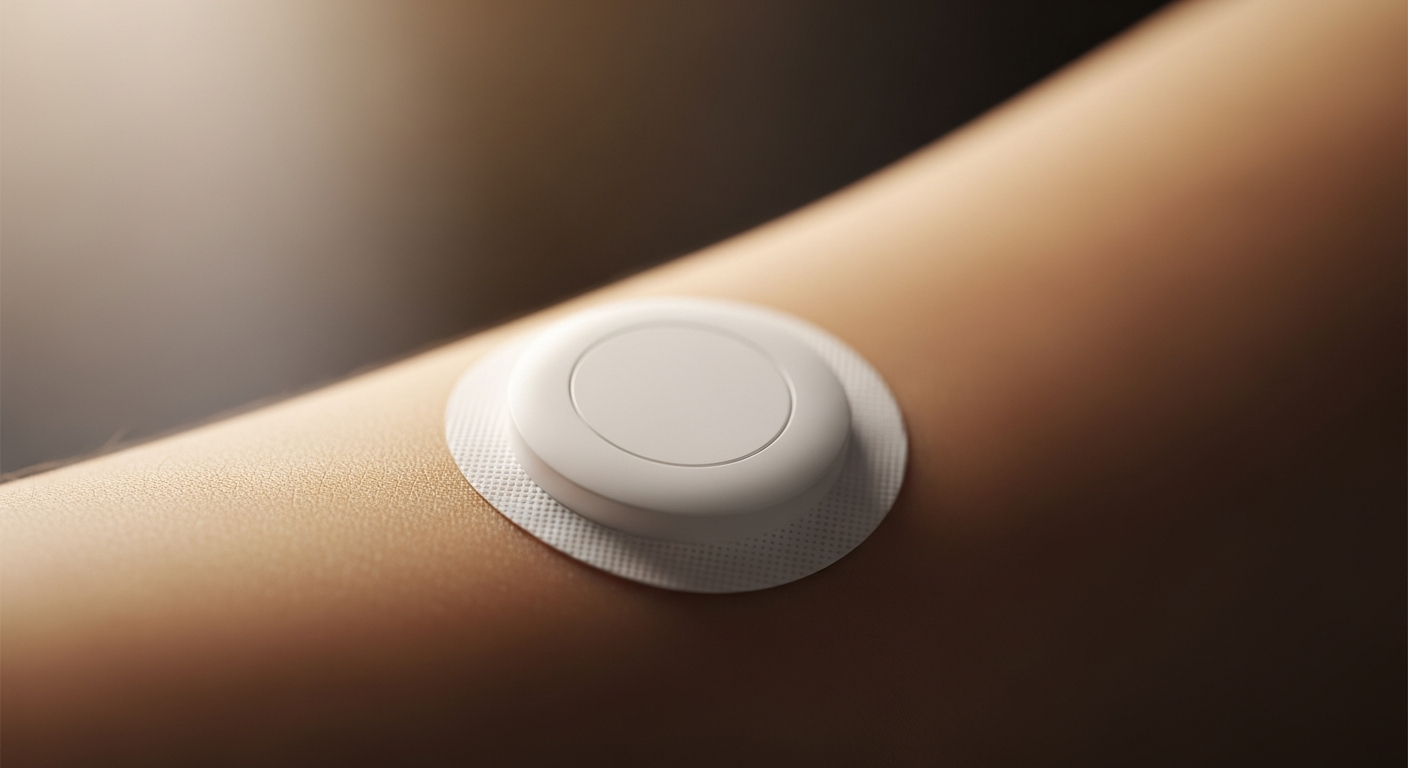
I’m not diabetic. And yet since early March I’ve been wearing a glucose sensor on my arm.
Why? Because blood sugar is one of the most underestimated performance factors — even for people without metabolic disease. Glucose spikes affect energy, focus, sleep quality, and mood. And almost nobody knows what’s actually happening in their body after a meal.
I’m changing that. Here’s what I’ve learned after the first weeks with the FreeStyle Libre 3.
What Is a CGM and How Does the Libre 3 Work?
A Continuous Glucose Monitor (CGM) measures glucose levels in your tissue continuously. No finger pricks. No manual testing. The sensor sits on your upper arm and transmits a reading to your smartphone automatically — every minute.
The FreeStyle Libre 3 by Abbott is the latest generation: smaller than its predecessor, Bluetooth-enabled (no scanning required), and delivers readings directly to the LibreView app.
How it sits: A tiny plastic patch (about 3cm diameter) with a short filament inserted just under the skin. The insertion is barely noticeable and you forget it’s there within hours.
Duration: 14 days per sensor.
Cost: ~€65 per sensor (available at pharmacies without a prescription in some countries). Covered by insurance for diabetics — not for self-pay users like me.
Why Does This Make Sense for Non-Diabetics?
Because “normal blood sugar” doesn’t guarantee optimal glucose dynamics.
Current research (including work from Levels Health and the Stanford “Big Ideas in Nutrition” study) shows: even in non-diabetics, there are dramatic individual differences in glucose response to identical meals. What produces a flat curve for one person can trigger a massive spike in another.
These glucose spikes are associated with:
- Energy crashes (the classic post-lunch slump)
- Worse sleep quality from evening spikes
- Food cravings after quickly-digested carbs
- Focus problems after a meal
- Long-term: increased insulin resistance risk
For performance optimization, this is highly relevant.
My Key Findings (Libre 3, Weeks 1–2)
I’m correlating my glucose data with Whoop data. Here are the most surprising findings:
Finding 1: Oatmeal Isn’t as Harmless as I Thought
My “healthy” breakfast — oats with fruit — produced a spike to ~140 mg/dL followed by a crash to ~75 mg/dL within 90 minutes. This explained the concentration dip I’d been experiencing at 10:30 AM daily.
Fix: add protein and fat (eggs, nuts) → flat curve, no crash.
Finding 2: Evening Carbs and Sleep Quality
On evenings with late carbohydrate intake (pasta, bread), my Libre 3 showed glucose fluctuations until 11 PM. My Whoop deep sleep score was consistently worse those nights.
Correlation ≠ causation. But the consistency is convincing enough to keep testing.
Finding 3: Walking After Meals Isn’t a Myth
10 minutes of walking after a carb-heavy meal halved my peak glucose compared to sitting directly after eating. Muscles absorb glucose — a simple, highly effective mechanism.
Finding 4: Coffee on an Empty Stomach
An espresso before breakfast produced a cortisol-mediated glucose rise to ~105 mg/dL — without eating a single calorie. A well-known phenomenon, but seeing it in real-time in your own body is different from reading about it.
How Non-Diabetics Can Get the Libre 3
Access varies by country:
- GP/doctor: Request a prescription for a 2-week self-monitoring experiment. Most will cooperate.
- Online pharmacies: Some EU pharmacies ship without prescription (user responsibility)
- Startup services: Levels Health (US), Veri (EU) — bundled CGM subscription services
Important: Costs are entirely out-of-pocket for non-diabetics. ~€65 per 14-day sensor.
Is It Worth It?
Yes, if:
- You take performance optimization seriously
- You experience energy crashes, post-lunch slumps, or food cravings
- You want to understand how your body responds to specific meals
- You’re willing to invest €65 for 2 weeks and actually act on the data
No, if:
- You’ll just wear the sensor without changing any behavior
- You expect medical diagnoses (CGM is not a diagnostic device)
For me, it was one of the most insightful self-experiments I’ve ever done. The combination of Libre 3 + Whoop gives me a picture of my biology I simply didn’t have before.
I’ll continue documenting findings from this 2-week experiment here — with actual data and glucose curves.
Keep reading
Related articles on this topic: